
Water management is at the heart of nearly every human activity — from irrigating a field and supplying a hospital to cooling an industrial machine and filling a household tank. Pumps make all of this possible, and among the many pump designs available today, the centrifugal monoblock pump stands out as a reliable workhorse trusted across the globe.
Whether you are a farmer looking to draw water from a borewell, a contractor specifying equipment for a building project, or an engineer evaluating options for a process plant, understanding the centrifugal monoblock pump thoroughly will help you make informed, cost-effective decisions. This guide breaks it all down — from the basic physics of how centrifugal force moves water to the practical advice of which model suits your needs.
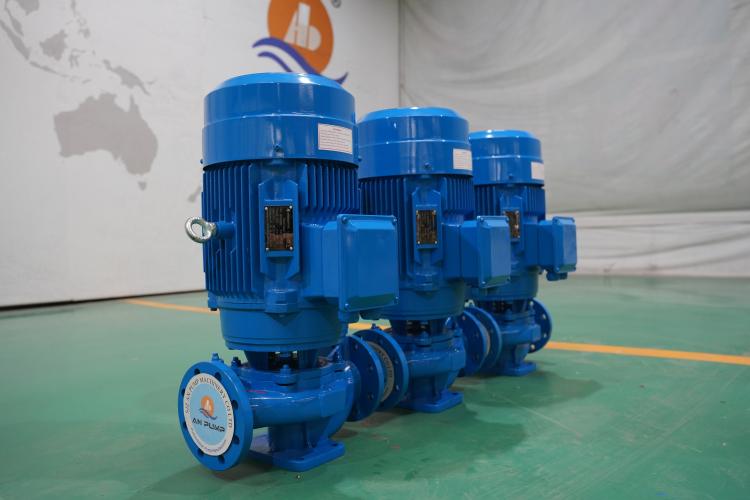
The term monoblock comes from the concept of a single, unified block — meaning the motor and the pump are housed together as one integrated unit with a shared shaft. In a conventional centrifugal pump setup, the motor and the pump body are separate components joined by a flexible coupling. A monoblock pump eliminates that coupling entirely.
Definition: A centrifugal monoblock pump is a single-shaft, close-coupled pump unit where the impeller is mounted directly on the motor's extended shaft, combining the motor and the hydraulic pump section into one compact assembly.
This design philosophy reduces the overall footprint of the machine, improves alignment accuracy, lowers the risk of vibration-induced wear, and simplifies installation. Because there is no mechanical coupling to align, install, or maintain, monoblock pumps are generally easier to work with than traditionally coupled pumps — making them popular in settings where skilled maintenance staff may not always be available.

Understanding the working principle requires two layers of knowledge: how centrifugal force moves a fluid, and how the monoblock configuration delivers that force efficiently.
When the motor is energized, the impeller — a disc fitted with curved vanes — begins to spin at high rotational speed. Liquid enters the pump through the suction inlet, typically at the centre (eye) of the impeller. As the impeller rotates, centrifugal force pushes the liquid outward along the vanes and toward the impeller's outer edge. This outward motion imparts kinetic energy to the liquid, increasing its velocity.
The high-velocity liquid then enters the volute casing — a spiral-shaped chamber that gradually widens. As the liquid slows down in this expanding space, kinetic energy converts into pressure energy (Bernoulli's principle). This pressurized liquid is then discharged through the outlet, pushing it through pipework to the desired destination.
In a monoblock configuration, because the impeller sits directly on the motor shaft:
The result is a pump that is mechanically simpler, starts more smoothly, and tends to have fewer failure points than traditionally coupled alternatives.
Every centrifugal monoblock pump — regardless of brand or size — is built around the same core components:
The electric motor provides the rotational energy that drives the impeller. Most monoblock pumps are powered by single-phase or three-phase induction motors. The motor shaft is extended to accommodate the impeller directly.

The impeller is the heart of the pump. It converts motor speed into fluid velocity. Impeller designs vary — open, semi-open, and closed — depending on the application and the nature of the fluid being pumped.

The spiral-shaped pump casing surrounds the impeller and guides the high-velocity liquid into the discharge pipe. Its gradually widening cross-section is critical to converting velocity head into pressure head efficiently.
Where the rotating shaft enters the pump casing, a sealing mechanism prevents liquid from leaking out and air from leaking in. Modern monoblock pumps almost universally use mechanical seals, which are more reliable and require less maintenance than traditional rope gland packing.
These are the inlet (suction) and outlet (discharge) flanges or threaded connections through which liquid enters and exits the pump. Their diameter directly influences flow rate.
Ball or roller bearings support the shaft and maintain its rotational alignment. In monoblock pumps, the motor's own bearings typically do double duty, supporting both the rotor and the impeller.
Usually cast iron, stainless steel, or engineering plastic — the pump body houses all the hydraulic components and must withstand both mechanical stresses and the corrosive or abrasive properties of the pumped fluid.
Not all monoblock pumps are identical. They are categorized based on design, mounting, and application:
| Benefit | Explanation |
|---|---|
| Compact design | Saves floor space; motor and pump share one frame |
| Easy installation | No coupling alignment needed; faster commissioning |
| Low vibration | Direct mounting eliminates misalignment-induced vibration |
| Cost-effective | Lower initial cost than coupled pump sets |
| Lower maintenance | Fewer moving parts and no coupling to replace |
| High efficiency | Direct energy transfer from motor to impeller |
| Versatility | Available in a wide range of sizes, materials, and configurations |
| Limitation | Explanation |
|---|---|
| Motor replacement | If the motor fails, the entire unit may need servicing |
| Limited bearing capacity | Motor bearings bear additional radial load from the impeller |
| Not suited for very high power | Large industrial applications may still require separately coupled pumps |
| Heat transfer | Motor heat can warm the pumped liquid — unsuitable for some precise temperature-sensitive processes |
The centrifugal monoblock pump's adaptability makes it suitable for an impressively broad range of applications:
Farmers use monoblock pumps extensively to draw water from open wells, borewells, ponds, and canals for crop irrigation, livestock watering, and drip irrigation systems.
In homes and apartment complexes, monoblock pumps pressurize the water supply, fill overhead tanks, and boost municipal water pressure in low-pressure zones.
Industries use monoblock pumps for transferring cooling water, process water, condensate, and light chemical solutions in manufacturing plants, power stations, and refineries.
Smaller monoblock pump sets serve as auxiliary water transfer units in building fire suppression networks.
Heating, ventilation, and air conditioning systems rely on monoblock pumps for circulating chilled water and hot water through cooling towers and fan coil units.
Stainless steel monoblock pumps handle hygienic transfer of liquids including milk, juices, syrups, and edible oils.
Construction sites and mines use monoblock pumps to remove accumulated rainwater or groundwater from excavations and tunnels.
Choosing the right pump requires evaluating several technical parameters:
Measured in litres per minute (LPM) or cubic metres per hour (m³/h). Calculate the volume of liquid you need to move in a given time period.
Head is the total pressure the pump must overcome, expressed in metres of water column. It includes:
Motor power must match the hydraulic requirements. Undersized motors overheat; oversized motors waste energy.
Continuous-duty applications need motors and seals rated for 24/7 operation.
Outdoor installations may require weather-protected (IP55 or IP65) motor enclosures.
Proper maintenance significantly extends pump life and reduces downtime:
| Feature | Monoblock Pump | Coupled Pump Set | Submersible Pump |
|---|---|---|---|
| Installation | Simple | Requires alignment | Below water level |
| Maintenance | Low | Moderate | Complex |
| Space required | Minimal | Moderate | Minimal (underwater) |
| Initial cost | Low | Moderate–High | Moderate |
| Suitable for dry installation | Yes | Yes | No |
| Noise level | Low–Moderate | Moderate | Very low |
| Best use case | General purpose | High-power industrial | Deep wells, sumps |
Q: What is the difference between a monoblock pump and a centrifugal pump? A centrifugal pump is a broad category that describes any pump using centrifugal force to move liquid. A monoblock pump is a specific design of centrifugal pump where the motor and pump are integrated into a single unit with a shared shaft.
Q: Can a monoblock pump run continuously? Yes, provided it is rated for continuous duty (S1 duty class), is never run dry, and operates within its designed flow and pressure range.
Q: What causes cavitation in a monoblock pump? Cavitation occurs when the suction pressure drops below the liquid's vapour pressure, causing vapour bubbles to form and collapse violently. It causes noise, vibration, and rapid impeller damage. It is typically caused by a suction lift that is too high, a partially closed suction valve, or operating far from the design point.
Q: How long does a centrifugal monoblock pump last? With proper installation and routine maintenance, a quality monoblock pump can reliably serve for 10–15 years or longer.
Q: What is the maximum head a monoblock pump can achieve? Single-stage monoblock pumps typically deliver up to 50–80 metres of head. Multi-stage models can exceed 200 metres.
The centrifugal monoblock pump represents one of the most elegant solutions in fluid mechanics — a single, unified machine that converts electrical energy into fluid movement with remarkable simplicity and efficiency. Its compact footprint, ease of installation, low maintenance demands, and broad applicability across agriculture, industry, and domestic settings have made it a fixture in water management infrastructure worldwide.
Whether you are selecting a pump for the first time or upgrading an ageing system, understanding the working principle, component functions, selection criteria, and maintenance requirements covered in this guide will help you choose confidently and operate reliably. When matched correctly to the application — in terms of flow rate, head, fluid properties, and duty cycle — a centrifugal monoblock pump will deliver years of trouble-free performance.
