
Quick answer: To reduce slurry pump maintenance costs, run the pump close to its best efficiency point, choose wear materials that match your slurry, control operating speed, protect seals and bearings from contamination, and replace wear parts on a condition-based schedule instead of waiting for failure. Together, these steps typically extend component life and reduce unplanned downtime.
A slurry pump moves a mixture of liquid and solid particles such as sand, ore tailings, coal fines, fly ash, or dredged sediment. Unlike a clear-water pump, it is under constant attack from abrasion, erosion, and sometimes chemical corrosion.
Each of these forces removes material from the impeller, casing liner, suction liner, and throatbush. As clearances open up, efficiency drops, energy use climbs, and eventually the pump can no longer hold its duty point.
The main cost drivers usually fall into four groups:


The good news is that most of these costs are controllable. The strategies below are the ones that make the biggest difference in mining, mineral processing, power generation, and dredging.
Many chronic maintenance problems start on the day the pump is specified. A pump that is oversized, undersized, or built from the wrong materials will wear out early no matter how well it is maintained.
Start with a full slurry characterization. Before selecting a pump, gather:
Sharing accurate data with the manufacturer helps them recommend the right pump size, impeller design, and materials. Selecting a pump on water-equivalent assumptions is one of the most common and costly mistakes.
Size for the real duty point. An oversized pump running at reduced flow will recirculate internally, run hot, and wear unevenly. An undersized one will run flat out and wear quickly. The goal is a pump whose normal operating point sits close to its best efficiency point (BEP).
Related Reading: Selecting the Right Slurry Pump: A Comprehensive Guide
The material of the wetted end is the single biggest lever on component life. No one material is best everywhere, so the choice depends on the slurry.
| Material | Best For | Main Limitation |
|---|---|---|
| High-chrome white iron | Coarse, sharp, abrasive slurries | Brittle; can crack on impact |
| Natural rubber liners | Fine, sharp particles at moderate speeds | Not suited to coarse particles, high temperatures, or oils |
| Polyurethane | Fine to medium particles, mildly corrosive service | Temperature limits |
| Ceramic or silicon carbide | Extreme abrasion and corrosive conditions | Higher cost; sensitive to impact |
| Duplex or stainless alloys | Corrosive slurries with moderate abrasion | Less abrasion resistance than hard irons |
A practical rule of thumb: elastomers such as rubber tend to perform well with fine particles because the particles rebound off the flexible surface, while hard metal alloys are usually preferred for coarse, heavy solids. In corrosive or acidic duties, the chemistry may rule out otherwise excellent abrasion-resistant options.

If you are unsure, ask your supplier for field references from similar applications, or run a trial with two materials in parallel pumps.
Running away from the BEP is a silent cost multiplier. At low flows, internal recirculation and turbulence attack the casing and impeller. At high flows, velocities rise and so does wear.
Slurry wear is highly sensitive to velocity. In general, wear rate increases faster than linearly with speed, commonly cited as roughly a power of two to three depending on the material and slurry. This means even a modest reduction in speed can deliver a disproportionate extension in wear life.
How to keep the pump in its sweet spot:
That last point is a balancing act. Too slow, and solids settle, causing blockages and pipe wear. Too fast, and wear accelerates everywhere. Good process data helps you find the middle ground.
Since wear is so dependent on speed, a VFD is one of the most effective upgrades for lowering total cost of ownership. It offers several benefits:
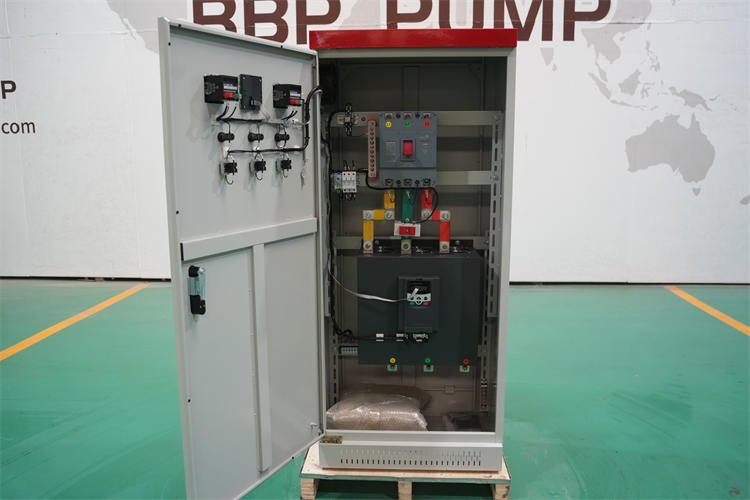
Speed control does have limits. Running too slowly can cause settling in the pump or pipeline, so set a minimum speed based on your slurry's settling behavior.
Sealing systems are a frequent source of unplanned stops. Slurry is unforgiving on seals because abrasive particles work their way into every gap.
Common sealing options include:
Ways to cut seal costs:
Bearing failure is rarely just "bad luck." In most cases, it comes from contamination, incorrect lubrication, misalignment, or overload.
Best practices include:
Over-greasing is as harmful as under-greasing because it raises operating temperature and can damage seals. Following a documented lubrication procedure prevents both.
Cavitation, the formation and collapse of vapor bubbles, pits impeller surfaces and quickly accelerates wear. Slurry pumps are especially sensitive because they often operate with lower suction pressure and thicker fluids.
To prevent cavitation:
Listening for a "gravel" or crackling noise and watching for erratic pressure readings can give early warning that cavitation has started.
A well-designed system reduces stress on the pump. Problems in piping and sumps often show up as pump wear.
Fixing pumps only after they fail is the most expensive strategy. Fixed-interval maintenance is better but can lead to replacing parts that still have life left. Condition-based maintenance uses actual data to decide when work is required.
Useful condition indicators:
Track this data in a simple log or maintenance management system. Over time, you will build a clear picture of typical wear rates and can plan replacements during scheduled shutdowns rather than emergency stops.
The gap between the impeller and the suction liner (or throatbush) has a strong influence on efficiency and wear. As it opens up, more slurry recirculates and performance falls.
Many pumps have an adjustment mechanism to restore this clearance, which can extend impeller life and restore performance without a full replacement. Following the manufacturer's clearance recommendation and adjusting it during scheduled checks is a low-cost way to hold efficiency.
When rebuilding, consider:
Even the best equipment underperforms in untrained hands. Clear procedures cut errors that lead to premature failures.
Consistent procedures also make it easier to onboard new staff and keep maintenance quality steady across shifts.
A cheaper pump or a lower-grade liner may look attractive on the purchase order but often costs more over its lifetime. When comparing options, evaluate:
A slightly more expensive wear material that lasts twice as long typically pays for itself quickly, particularly where each stoppage disrupts a continuous process.
Abrasive and erosive wear of the impeller and liners is usually the largest contributor, made worse by operating away from the best efficiency point or at excessive speed.
There is no universal interval. Life depends on slurry abrasiveness, materials, and operating speed. Tracking performance trends and inspecting wear parts regularly allows you to replace them based on condition rather than a guess.
Yes. Wear is strongly dependent on velocity, so a modest speed reduction can significantly extend component life, as long as the speed remains high enough to prevent solids from settling.
It depends on the slurry. Rubber often performs well with fine, sharp particles, while hard metal alloys are generally better for coarse, heavy solids. The best choice is the one that delivers the longest life for your specific conditions.
Yes. A VFD lets you match speed to demand, reduces wear and energy use, and provides gentler starts that reduce mechanical stress.
Reducing slurry pump maintenance costs is not about a single fix. It comes from a chain of good decisions: selecting the right pump and materials, operating within the proper range, protecting seals and bearings, and using data to guide maintenance. Plants that treat pump reliability as an ongoing process, rather than a reaction to failures, typically see longer component life, lower energy bills, and fewer surprises.
