
Selecting the right motor for a pump is one of the most important decisions in any pumping system. Whether you are working with centrifugal pumps, slurry pumps, multistage pumps, sewage pumps, or fire pumps, the motor directly affects efficiency, reliability, operating cost, and equipment lifespan.
Many pump failures are not caused by the pump itself — they result from incorrect motor selection. Choosing the wrong voltage, frequency, or power rating can lead to overheating, excessive energy consumption, unstable performance, and costly downtime.
In this guide, you will learn how to select the right pump motor based on voltage, frequency, and power requirements. This article is designed for engineers, contractors, industrial buyers.

A pump motor converts electrical energy into mechanical energy to drive the pump impeller. If the motor is improperly matched to the pump, several problems can occur:
Proper motor selection ensures:
In industrial applications such as mining, water treatment, HVAC, agriculture, and wastewater handling, motor selection is critical for system stability.
Before selecting a motor, you should understand three key electrical parameters:
These parameters determine whether the motor can safely and efficiently operate the pump.
Voltage refers to the electrical supply available for the motor.
Common industrial motor voltages include:
| Region | Common Voltages |
|---|---|
| North America | 230V / 460V / 575V |
| Europe | 380V / 400V / 415V |
| Asia | 220V / 380V / 415V |
| Middle East | 380V / 415V |
| Industrial High Voltage | 3.3kV / 6kV / 10kV |
Incorrect voltage can cause:
For example:
Used mainly for:
Typical voltage:
Advantages:
Disadvantages:
Used for:
Typical voltages:
Advantages:
For industrial applications, three-phase motors are generally preferred.
Before ordering a pump motor, verify:
Check the plant or project power system:
Long cable runs can create voltage drops.
If the pump is installed far from the power source:
This is especially important for:
Different countries use different electrical standards.
Examples:
Always confirm local standards before production.
Frequency refers to the AC power cycle rate measured in Hertz (Hz).
The two global standards are:
Motor speed depends on frequency.
The relationship is:

Where:
This means:
| Parameter | 50Hz | 60Hz |
|---|---|---|
| Motor Speed | Lower | Higher |
| Pump Flow | Lower | Higher |
| Power Consumption | Lower | Higher |
| Pressure/Head | Lower | Higher |
| Heat Generation | Lower | Higher |
For example:
A centrifugal pump operating at 60Hz may produce:
If a motor designed for 50Hz operates on 60Hz without adjustment, the pump may overload.
Sometimes yes — but it depends on voltage and load conditions.
| Motor Design | Can It Operate? |
|---|---|
| 50Hz motor on 60Hz | Usually possible |
| 60Hz motor on 50Hz | Risky |
| Dual-frequency motor | Best option |
Operating at the wrong frequency may cause:
For export pump projects, always specify frequency clearly.
Motor power is usually measured in:
The motor must provide enough power to drive the pump under all operating conditions.
Pump power depends on:
The hydraulic power formula is:

Where:
Many buyers assume:
“Bigger motor means safer operation.”
This is not always true.
Oversized motors can cause:
A properly sized motor is usually better than an excessively oversized one.
Most pump manufacturers recommend:
| Application | Recommended Margin |
|---|---|
| Clean water pumps | 10–15% |
| Slurry pumps | 15–25% |
| Heavy-duty applications | 20–30% |
Example:
If calculated pump power is 45kW:
The service factor indicates how much overload a motor can handle.
Example:
Actual allowable load:
50 x 1.15 = 57.5 HP
However, motors should not continuously operate at service factor levels.
Different pumps have different load characteristics.
Power increases with flow.

Require additional power because of:

Require stable torque output.
Motor selection changes depending on fluid type.
Consider:
Thicker or heavier liquids require more power.
Some pumps require high starting torque.
Examples:
Possible solutions:
Modern industrial motors are classified by efficiency levels.
| Efficiency Class | Description |
|---|---|
| IE1 | Standard efficiency |
| IE2 | High efficiency |
| IE3 | Premium efficiency |
| IE4 | Super premium efficiency |
Advantages:
Although IE3 or IE4 motors cost more initially, they often save significant energy over time.
For continuous industrial operation, premium-efficiency motors are strongly recommended.
A VFD controls motor speed by adjusting frequency.
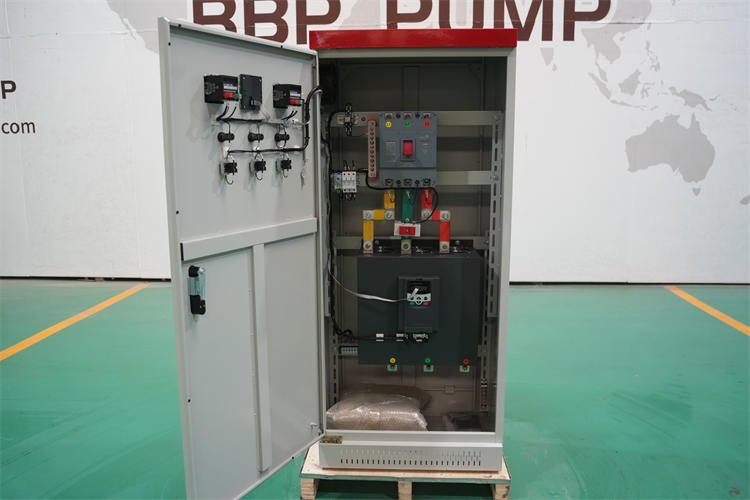
Benefits include:
VFDs are ideal for:
Design conditions and real conditions may differ.
Always consider:
Motor selection should include:
If future system expansion is planned:
This is common in export projects.
Always verify:
Suppose you need a centrifugal water pump for industrial cooling.
System requirements:
Estimated hydraulic power:
Recommended margin:
Required motor:
37 x 1.15 = 43 kW
Nearest standard motor:
Selected motor:
Pump performance curves help determine:
Never select a motor without reviewing the pump curve.
Professional pump manufacturers can help with:
This reduces operational risk.
The cheapest motor is not always the best choice.
Consider:
Efficient motors often provide the lowest long-term operating cost.
Selecting the right pump motor involves much more than simply matching horsepower. Voltage, frequency, and power must all align with the pump’s operating conditions and the site’s electrical system.
A properly selected motor delivers:
Whether you are selecting a motor for a centrifugal pump, slurry pump, sewage pump, split-case pump, or multistage pump, careful engineering evaluation is essential.
Before purchasing, always verify:
The right motor selection can significantly improve pump system performance while reducing energy and maintenance costs for years to come.
