
In any industrial or commercial boiler system, water is the lifeblood — and the pump is the heart. Selecting the wrong high-pressure multistage pump doesn't just reduce efficiency; it can lead to catastrophic failures, premature wear, and costly downtime that disrupts entire production lines. Yet pump selection is often treated as an afterthought, delegated to catalog browsing rather than careful engineering analysis.
This guide is designed to change that. Whether you're overseeing a steam generation plant, a district heating system, or a high-pressure hot water boiler network, understanding how to properly evaluate and select a multistage centrifugal pump will directly impact your system's reliability, energy consumption, and operational lifespan.
Let's break down every factor that matters — from hydraulic requirements and materials of construction to NPSH, efficiency curves, and compliance with industry standards.
A multistage pump is a centrifugal pump that contains two or more impellers (stages) arranged in series within a single casing. Each stage adds pressure (head) to the fluid, allowing the pump to achieve high discharge pressures that a single-stage pump simply cannot deliver.

In boiler feed water applications, these pumps are critical because boilers operating at high steam pressures demand feed water delivered at even higher pressures — typically 10% to 20% above the boiler operating pressure to overcome check valves, economizers, and internal resistance.
Key characteristics of multistage boiler feed pumps include:
Related Reading: What is a Multistage Centrifugal Pump?
Before opening a single product catalog, you must define your system's hydraulic demands with precision. This is the foundation of every other decision.
Total Dynamic Head is the total equivalent height the pump must overcome, expressed in meters (or feet). For a boiler feed system, TDH includes:
Quick Formula:
TDH = Static Head + Friction Losses + Boiler Pressure Head + Velocity Head
For a boiler operating at 60 bar, with 5 meters of static elevation and 15 meters of friction losses, your TDH would be approximately 632 meters — clearly requiring a multistage solution.
Flow rate is determined by the boiler's evaporation rate plus a safety margin, typically 10–20%. Include blowdown rates and any recirculation requirements in your calculations.
Expressed in m³/h or liters per minute (LPM), the design flow rate directly influences your impeller diameter selection and pump speed.
Boiler systems rarely operate at a single, fixed point. You need to define:
Ideally, your normal operating point should fall within 80–110% of the pump's Best Efficiency Point (BEP) on its performance curve.
Net Positive Suction Head (NPSH) is arguably the single most important parameter in hot water pump selection, and it's where many engineers make costly mistakes.
The golden rule: NPSHa must always exceed NPSHr, with a safety margin of at least 0.5 to 1.0 meters (per ISO 9906 guidelines), and more in critical applications.
Boiler feed water is typically heated to 80°C–160°C to reduce dissolved oxygen. At elevated temperatures, the vapor pressure of water rises dramatically, significantly reducing your NPSHa. For example:
This dramatic increase means you must either elevate the deaerator (to increase static suction head), maintain sufficient back-pressure, or select a pump with a low NPSHr — often achieved through a double-suction first-stage impeller or an inducer.
Always provide the pump manufacturer with your feed water temperature, deaerator pressure, and suction pipe configuration so they can verify NPSH compatibility before finalizing a selection.
High-pressure, high-temperature boiler feed water is not ordinary water. It is chemically treated, deaerated, and often carries trace contaminants. Material selection must account for temperature, pressure, and chemical compatibility.
| Component | Common Material | Notes |
|---|---|---|
| Casing | Cast iron (low-pressure), cast steel, stainless steel | Carbon steel or alloy steel for high pressure |
| Impellers | Stainless steel (SS316, SS304) | SS316 preferred for better corrosion resistance |
| Shaft | Stainless steel or alloy steel | Must withstand cyclic stresses |
| Wearing rings | SS316, bronze | Maintain close clearances to minimize internal recirculation |
For high-pressure boiler feed applications, mechanical seals are strongly preferred over traditional packing:
Ensure your seal selection matches the temperature, pressure class, and shaft speed of the final pump specification.

The pump curve is your blueprint. Never purchase a pump without a verified performance curve from the manufacturer, and know how to read it.
Head-Capacity (H-Q) Curve: Shows the relationship between flow rate and total head. Look for a steeply rising curve toward shut-off, which provides stable operation and avoids flat-curve instabilities.
Efficiency Curve (η-Q): Identifies the Best Efficiency Point. Your design operating point should be close to BEP to minimize energy waste and shaft radial loads.
Power Curve (P-Q): Determines motor sizing. For centrifugal pumps, power typically rises with flow. Your motor must handle the maximum power draw at the highest anticipated flow, plus a service factor.
NPSHr Curve: Rises with flow rate. Verify that your NPSHa exceeds this curve across your entire operating range.
If your system demands exceed a single pump's capacity:
For boiler systems with variable load, running two smaller pumps in parallel — with one as a standby — is often the most reliable and energy-efficient configuration.
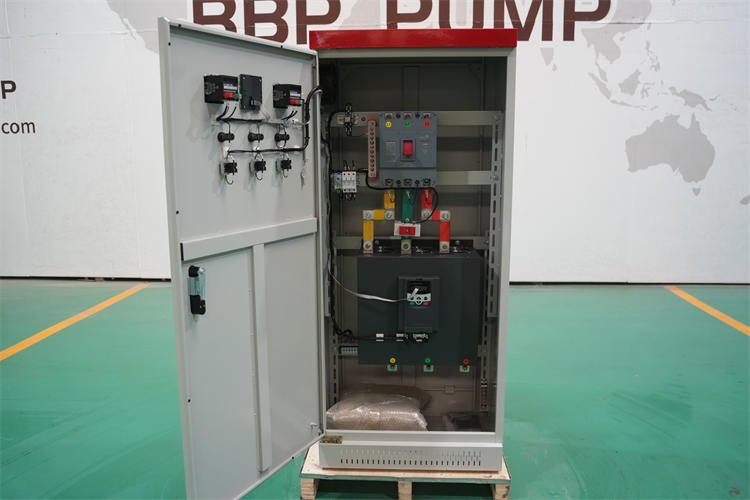
Traditional boiler feed pumps operate at fixed speeds (typically 1,450 RPM or 2,900 RPM at 50 Hz), controlled by throttling valves or bypass recirculation lines. While simple, this wastes energy.
Modern installations increasingly use Variable Frequency Drives (VFDs), which adjust pump speed to match system demand:
Note: When applying a VFD to a multistage pump, verify the pump's minimum allowable speed (to maintain adequate NPSH margins and bearing lubrication) and confirm the motor is VFD-rated.
For industrial boiler systems, regulatory and standards compliance is not optional.
For power plant applications in the United States, compliance with ASME BPVC (Boiler and Pressure Vessel Code) for the broader system is also a key consideration, influencing which pump designs are acceptable.
Always confirm which standards apply in your jurisdiction and industry sector before finalizing your specification.
The capital cost of a pump represents only a fraction — often less than 15% — of its total lifecycle cost. The majority comes from:
When comparing two pump options with similar hydraulic performance but different efficiencies, calculate the annual energy cost difference:
Annual Energy Cost = (Flow Rate × TDH × Fluid Density × g) / (Pump Efficiency × Motor Efficiency) × Operating Hours × Energy Cost per kWh
A pump with 2% higher efficiency operating 8,000 hours per year at 75 kW can save thousands of dollars annually — far outweighing a higher initial purchase price.
Also consider Mean Time Between Failures (MTBF) data from manufacturers and the availability of spare parts, especially for critical boiler applications where an emergency spare pump is typically held on-site.
Selecting a high-pressure multistage boiler feed pump is not a transaction — it should be a technical collaboration. Reputable pump manufacturers will provide:
Brands with established track records in boiler feed water service include manufacturers specializing in industrial multistage pump technology. Request references from comparable applications and verify the manufacturer's production quality certifications (ISO 9001, etc.).

1. Oversizing the pump: A pump operating far from its BEP will suffer from recirculation, increased vibration, and shortened bearing and seal life. Bigger is not always better.
2. Ignoring minimum flow requirements: Multistage pumps generate significant heat when throttled below minimum flow. Always install a recirculation line with an automatic recirculation valve (ARC valve) sized for minimum continuous stable flow.
3. Neglecting suction piping design: Even the best pump selection will fail if the suction piping introduces air entrainment, excessive velocity, or poor flow patterns. Follow Hydraulic Institute standards for suction pipe sizing and layout.
4. Selecting for maximum demand only: A pump perfectly sized for maximum load will operate inefficiently under typical part-load conditions. Consider your actual duty cycle in the selection process.
5. Skipping seal and material checks: Always verify that mechanical seal materials and elastomers are rated for your specific fluid temperature, pressure, and chemistry — especially if any chemical treatment additives are present.
Before finalizing your high-pressure multistage boiler feed pump selection, confirm you have addressed every item:
Selecting a high-pressure multistage pump for a boiler system is an engineering decision with long-term consequences. A pump that is correctly sized, properly specified, and well-matched to your system's hydraulic profile will deliver decades of reliable service with minimal intervention.
The process demands discipline: starting with accurate hydraulic data, applying NPSH analysis rigorously, choosing appropriate materials, and evaluating total lifecycle cost rather than just the purchase price. When you combine this technical rigor with collaboration from an experienced pump manufacturer, you transform what might seem like a commodity purchase into a cornerstone of your boiler system's long-term operational excellence.
Invest the time upfront. The payback — in energy savings, reduced maintenance, and system uptime — will be measured in years.
This article is intended for qualified engineers and technical professionals. All pump selections should be reviewed and validated by a licensed mechanical engineer familiar with the specific system requirements and local codes.
