
One of the most persistent myths in industrial procurement is that cutting costs on centrifugal pumps inevitably means cutting corners on quality. Facility managers, plant engineers, and procurement officers are routinely forced to defend budget decisions — often under pressure to reduce capital expenditure while maintaining operational reliability.
The truth is more nuanced. With the right strategies, it is entirely possible to reduce the total cost of ownership (TCO) of centrifugal pumps without sacrificing performance, longevity, or safety. The key lies in shifting focus from upfront purchase price to lifecycle value — and making smarter decisions across specification, procurement, installation, and maintenance.
This guide provides a comprehensive, actionable framework for doing exactly that.
A centrifugal pump is a mechanical device that uses a rotating impeller to move fluid by converting rotational kinetic energy into hydrodynamic flow energy. They are the backbone of countless industrial, municipal, agricultural, and commercial applications — from water treatment and HVAC systems to chemical processing and oil & gas operations.

Why quality matters:
Understanding these stakes clarifies why the goal is never to buy cheap — it's to buy smart.
One of the most overlooked sources of unnecessary cost in centrifugal pump procurement is over-specification. Engineers, understandably cautious, often specify pumps with performance margins well beyond actual system requirements. While a safety buffer is wise, excessive oversizing leads to:
The fix: Conduct a thorough hydraulic system analysis before specifying pump parameters. Define your actual flow rate, head requirements, fluid properties, and duty cycle. Use pump affinity laws to model part-load performance. Work with your pump supplier to select a unit that operates at or near its BEP under typical conditions — this alone can reduce energy costs by 10–25% and extend pump lifespan considerably.
The purchase price of a centrifugal pump typically represents only 15–25% of its total lifecycle cost. The remainder is consumed by energy, maintenance, repair, and eventual replacement. Procurement decisions made solely on the basis of the lowest quote are therefore economically irrational.
TCO components to evaluate:
| Cost Category | Approximate Share of TCO |
|---|---|
| Initial purchase price | 15–25% |
| Energy consumption | 40–60% |
| Maintenance and repairs | 15–25% |
| Downtime and lost production | 5–15% |
When comparing pump suppliers, request energy performance data (efficiency curves), MTBF (Mean Time Between Failures) statistics, and expected seal/bearing service intervals. A pump priced 20% higher but operating at 5% greater efficiency over a 15-year lifespan will almost always deliver superior ROI.
Material selection is another area where costs spiral unnecessarily. Stainless steel or exotic alloy pumps are often specified "just to be safe" when carbon steel, cast iron, or engineered polymers would perform equally well for the actual fluid handled.
Guidelines for cost-effective material selection:
Work with a corrosion engineer or consult fluid compatibility charts before finalizing material specifications. Matching the material to the actual chemical environment — rather than specifying up-tier materials as a precaution — can reduce pump cost by 30–50% in many standard service conditions.
One of the most effective long-term strategies for cost reduction is fleet standardization — limiting the variety of pump models, brands, and configurations used across your facility.
Benefits of standardization:
Develop a preferred vendor list and approved pump series for each service category (general duty, chemical service, high-pressure, slurry, etc.). Allow deviations only where genuinely necessary based on process requirements.
Traditional time-based maintenance schedules often result in performing maintenance too early (wasting resources) or too late (causing failures). Condition-based maintenance, enabled by affordable modern sensor technology, monitors actual pump health and triggers service only when needed.
Key CBM monitoring parameters for centrifugal pumps:
The cost of basic vibration and temperature sensors has dropped dramatically over the past decade. A modest CBM investment can reduce unplanned downtime by 30–50% and extend mean time between overhauls, directly reducing maintenance costs without any compromise to reliability.
In applications with variable flow demand, running a centrifugal pump at fixed speed against a variable load is inherently wasteful. Fixed-speed pumps in variable-demand systems are typically throttled using control valves — a method that wastes energy while creating unnecessary back-pressure and wear.
Variable Frequency Drives (VFDs) solve this elegantly. By adjusting motor speed to match actual demand, VFDs can reduce energy consumption by 20–50% in variable-load applications, thanks to the cube relationship between pump speed and power consumption (pump affinity laws).
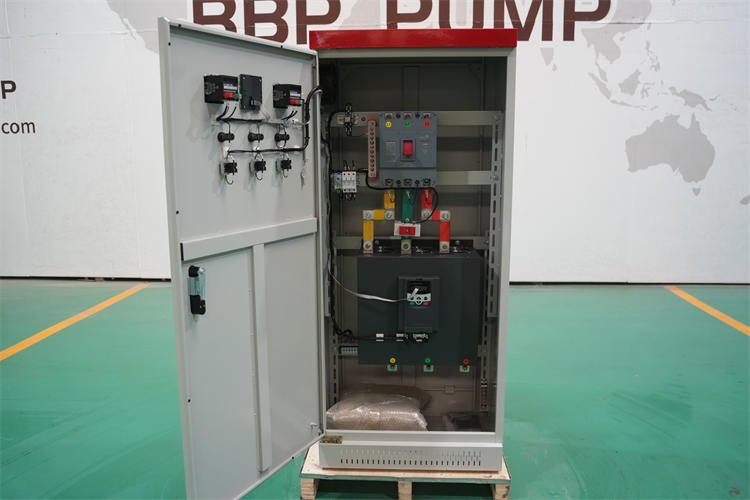
Cost-saving pump control strategies:
VFD retrofits typically achieve payback periods of 12–24 months in commercial or industrial HVAC and process applications.
Procurement strategy significantly impacts cost without requiring any compromise to product quality. Consider the following approaches:
Buy from reputable manufacturers with broad distribution networks. Pumps from well-established brands (even mid-tier ones) benefit from global parts availability, technical support infrastructure, and tested reliability data — all of which reduce long-term risk and support costs.
Consider OEM-equivalent replacement parts. For maintenance parts such as mechanical seals, impellers, and wear rings, qualified third-party manufacturers often supply components meeting or exceeding OEM specifications at 20–40% lower cost. Verify material certifications and dimensional tolerances carefully before approval.
Leverage blanket purchase orders. Negotiate annual supply agreements with preferred pump or parts suppliers to secure favorable pricing in exchange for commitment volume, without sacrificing product quality.
Evaluate refurbished or remanufactured pumps for non-critical applications. Certified remanufactured pumps from reputable rebuilders can offer 40–60% savings versus new equipment while meeting equivalent performance standards. Confirm that remanufacturing includes replacement of all wear components and full hydraulic performance testing.
A high-quality pump installed poorly will underperform and fail prematurely. Improper installation is one of the most avoidable causes of centrifugal pump failure — and one of the most costly.
Common installation errors that drive up lifecycle costs:
Investing in proper laser alignment, precision grouting, and a structured commissioning checklist prevents expensive failures that occur within the first year of operation — preserving both equipment quality and budget.
No cost-reduction strategy will succeed if the people operating and maintaining pumps lack the knowledge to do so effectively. Undertrained maintenance personnel contribute to:
Invest in structured training programs — either through pump manufacturers, industry associations (such as the Hydraulic Institute), or in-house competency development. The cost of a training day is trivial compared to the cost of a single major pump failure or unplanned outage.
Cost reduction is not a solo effort. The right pump supplier is a strategic partner — offering engineering support, stock reliability, and service capability that reduce your total burden of ownership.
When evaluating suppliers, look beyond price to assess:
A supplier relationship built on trust and technical competence saves more money over a 10-year horizon than any one-time discount on the initial purchase.
| Strategy | Primary Saving Area |
|---|---|
| Right-size the pump | Capital cost, energy, wear |
| Evaluate TCO over purchase price | Long-term operational cost |
| Match materials to actual service | Capital cost |
| Standardize the pump fleet | Parts inventory, labor, training |
| Implement condition-based maintenance | Maintenance and downtime cost |
| Deploy VFDs for variable loads | Energy cost |
| Source strategically | Procurement cost |
| Ensure proper installation | Failure prevention, lifespan |
| Train maintenance personnel | Labor efficiency, reliability |
| Partner with the right supplier | Total lifecycle support |
Saving cost on centrifugal pumps is not about buying cheaper equipment — it is about making better decisions across the entire pump lifecycle. From right-sizing and material selection to condition monitoring, VFD control, and supplier partnership, the opportunities for cost reduction without quality compromise are abundant.
The facilities and operations teams that succeed in this are those who take a long-term, total-cost perspective. They understand that a pump is not a one-time purchase — it is a multi-year capital commitment whose true cost is shaped by every decision made before, during, and after installation.
By applying the strategies outlined in this guide, you can significantly reduce centrifugal pump expenditure while maintaining — or even improving — the performance, reliability, and safety standards your operation depends on.
This article was written based on established principles of pump engineering, lifecycle cost analysis, and industrial maintenance best practices. For application-specific guidance, always consult a qualified pump engineer or your equipment supplier.
